

The Illusion of Self: Nondual Meditation & Brain Science
Episode Overview
In this episode, John Dunne explores how our sense of self is constructed through thought, and how meditation and neuroscience converge on a similar insight: that what we take to be solid and real is often a useful but misleading mental model. Drawing on Buddhist philosophy, cognitive science, and decades of practice, he explains why thoughts feel true, how the brain predicts and organizes experience, and what happens when we begin to see through these processes.
We discuss how meditation helps “de-reify” thoughts—shifting them from perceived facts to mental events—and why this shift may play a central role in reducing anxiety and depression. Dunne introduces non-dual traditions like Mahamudra and Dzogchen, describing practices aimed not at changing experience, but at recognizing the nature of awareness itself. Rather than striving to become something new, these approaches emphasize uncovering what is already present.
The conversation also explores scientific research on advanced meditators, including surprising findings about brain activity, the limits of measurement, and the challenges of studying subjective experience. We touch on the concept of enlightenment, framing it not as a special state to achieve, but as the absence of grasping and fixation in everyday awareness.
This episode offers a grounded, intellectually rigorous look at the mind, and a practical reframe of meditation as a shift in perspective rather than a process of self-improvement.
P.S. — If you’re serious about starting or deepening your meditation practice, check out the FitMind meditation app.
About the Guest
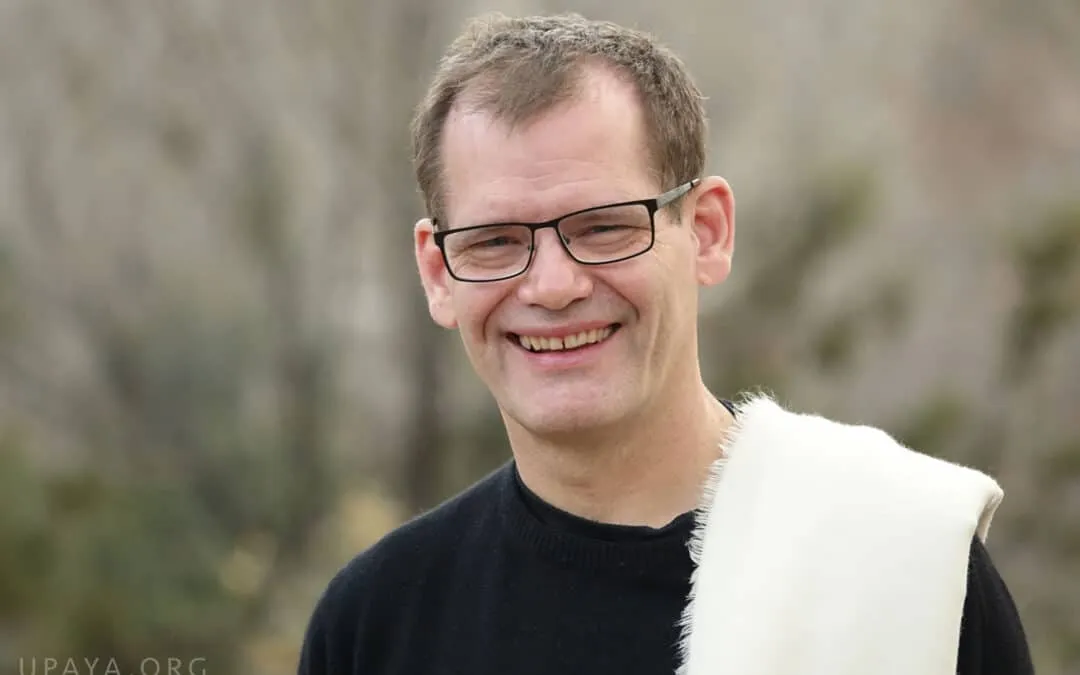
John Dunne is a scholar, translator, and longtime meditation practitioner whose work bridges Buddhist philosophy and modern science. He has spent decades studying and practicing Tibetan contemplative traditions, including Mahamudra and Dzogchen, while also contributing to research in cognitive science and neuroscience.
Dunne is a professor at the University of Wisconsin–Madison, where he holds the Distinguished Chair in Contemplative Humanities and works closely with the Center for Healthy Minds. His work explores how concepts like self, perception, and awareness are constructed, and how meditation can transform our relationship to them.
He is also a fellow of the Mind & Life Institute and has collaborated on numerous scientific studies examining meditation and the brain, helping to advance the dialogue between contemplative practice and modern research.
Show Notes
0:00 | From astronaut dreams to inner exploration
2:40 | Introducing John Dunne and his background
5:30 | Identity crisis and discovering meditation
9:30 | Early practice: Vipassana, metta, and analytical meditation
14:30 | Questioning reality and the nature of self
19:30 | Concepts, language, and why thoughts feel real
25:30 | How the mind constructs identity moment to moment
31:30 | Mahamudra and Dzogchen: gradual vs non-dual paths
38:30 | Effort vs effortlessness in meditation
45:00 | Anxiety, depression, and predictive processing
50:30 | De-reification: seeing thoughts as thoughts
56:30 | Watching the mind vs being lost in it
1:01:30 | Brain studies with advanced meditators
1:07:00 | Non-dual awareness and “always-on” presence
1:12:30 | What enlightenment is (and isn’t)
1:17:30 | Tukdam and the mystery of consciousness at death
1:22:30 | Science, meditation, and open questions
1:25:30 | Closing reflections